Project Screenshots
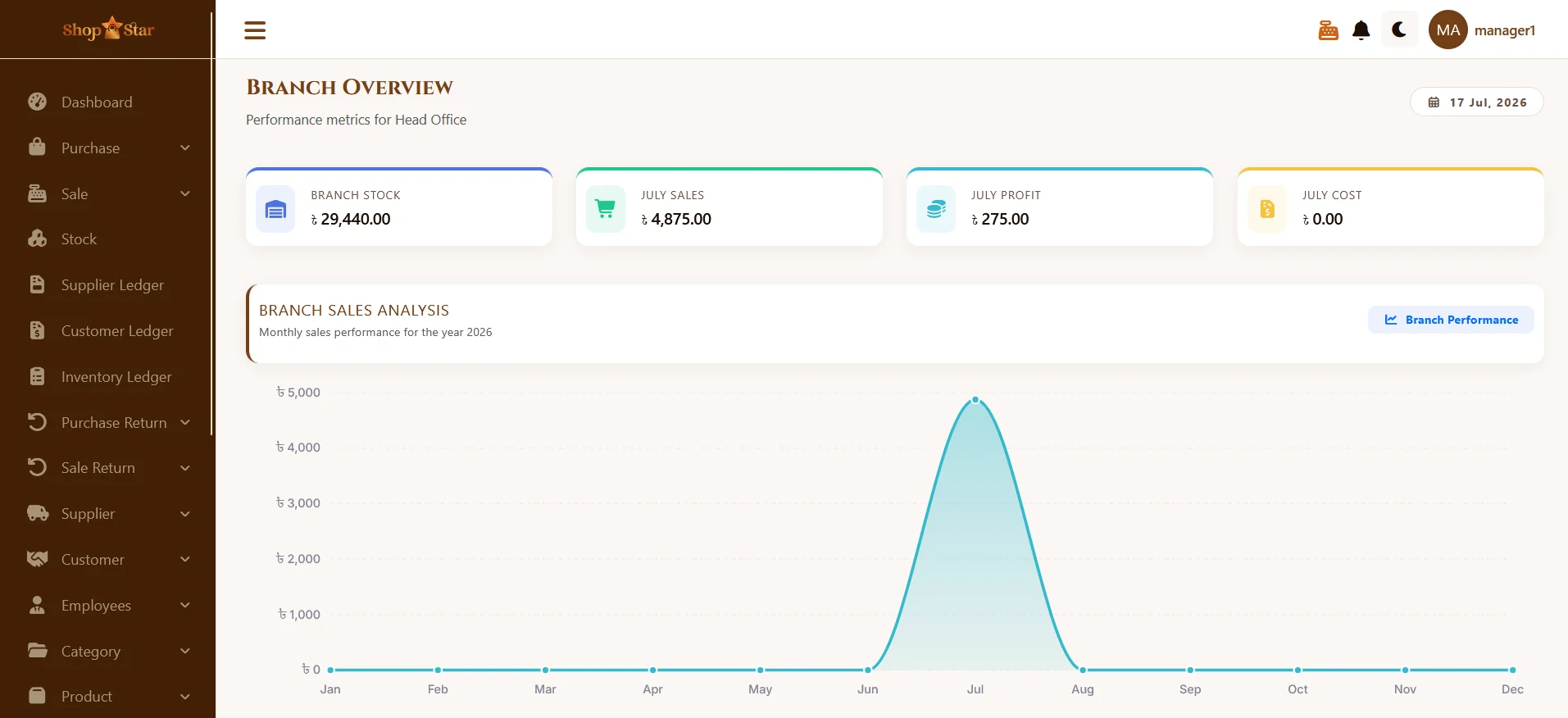
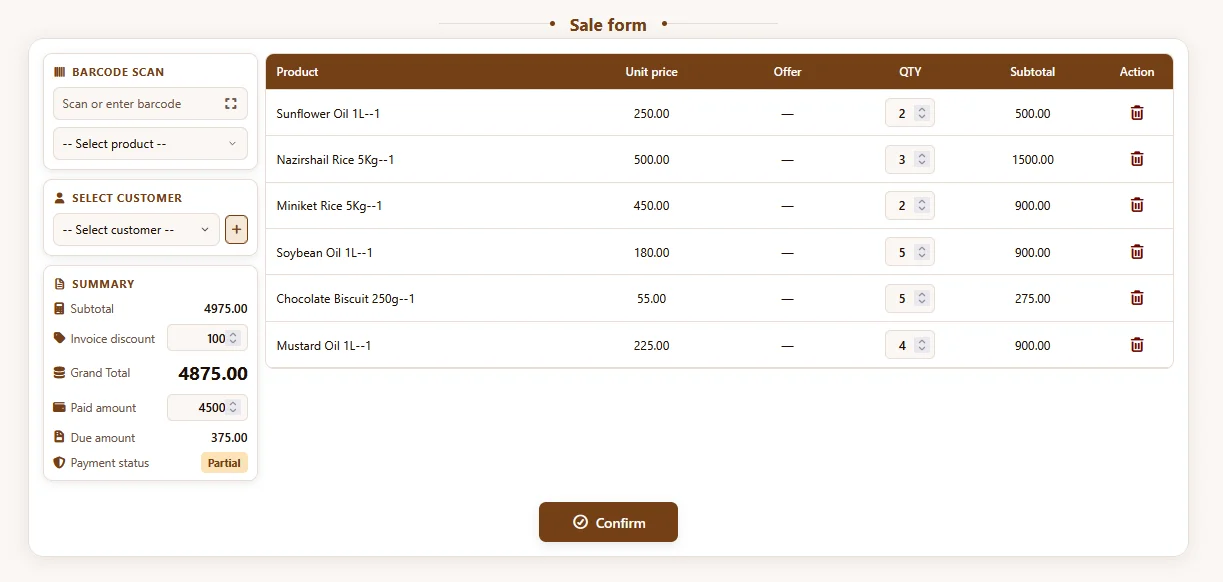
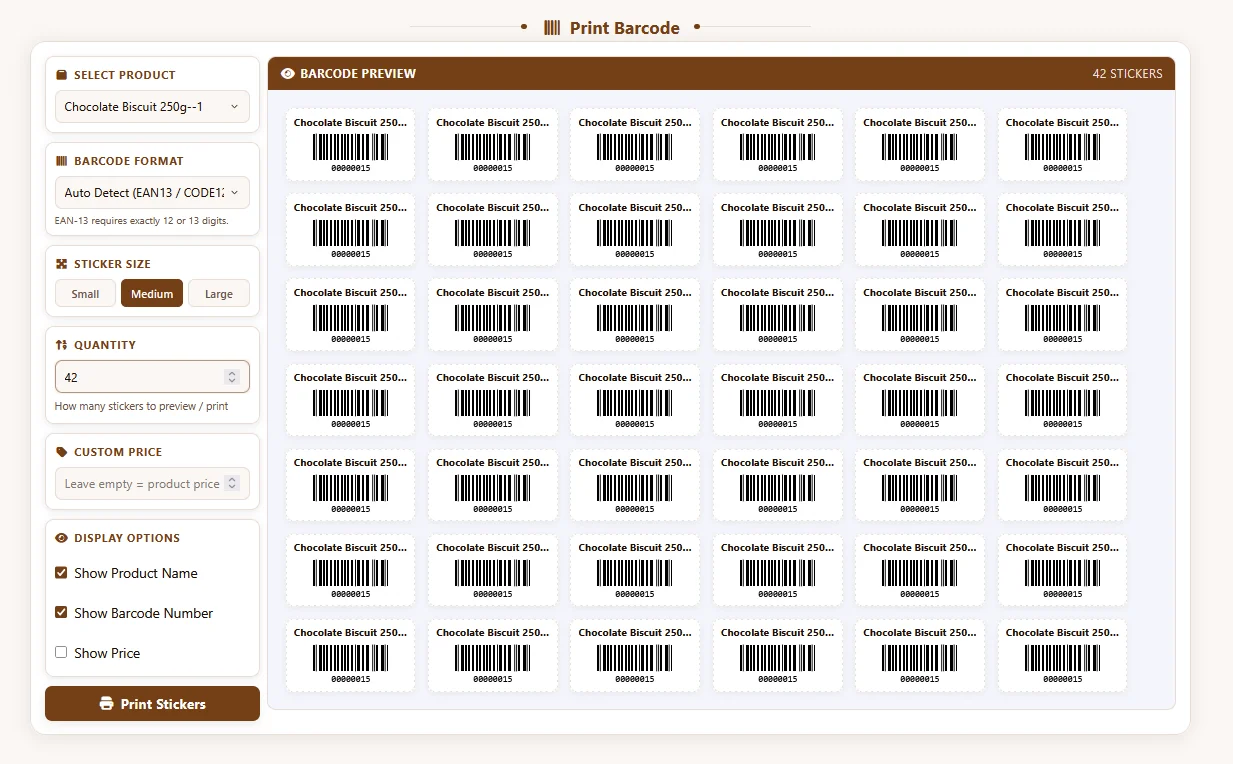
A complete web-based business management solution for Rainstar — built to handle inventory tracking, sales processing, purchase management, multi-branch operations, financial accounting, and business reporting with precision and efficiency.
The Inventory Management System & Point of Sale (IMS-POS) is a comprehensive, intelligent web-based application developed exclusively for Rainstar, designed to digitally transform and streamline every aspect of their business operations. Built with the PHP Laravel Framework, this system serves as a fully integrated business management platform that goes far beyond simple inventory tracking.
From real-time stock management to automated sales processing, every module works seamlessly together to reduce manual effort and eliminate human error. The system supports a structured three-role hierarchy — Admin, Manager, and Cashier — each with precisely controlled access and dedicated dashboards tailored to their responsibilities.
A comprehensive multi-level approval workflow ensures that every purchase, sales return, stock transfer, and cash withdrawal passes through the proper chain of authority before execution. Combined with a real-time notification system, barcode and QR code generation, branch-to-branch stock transfer, dynamic invoicing, and a powerful reporting engine, the IMS-POS empowers Rainstar to manage all critical business functions from a single centralized platform.
This solution is designed not just to manage inventory — but to transform the entire business into a smart, efficient, and fully digital environment where every process is transparent, connected, and optimized for business success.
The Admin holds the highest level of authority in the system. The Admin can manage branches, users, products, categories, employees, customers, suppliers, and system settings. All approvals for purchases, returns, stock transfers, and cash withdrawals ultimately require Admin authorization. The Admin also has full access to transaction history, offer management, global expense tracking, waste records, and all system-wide reports including sales, stock, profit, and expense analytics.
The Manager oversees their assigned branch operations. They can manage branch employees, create cashier accounts, create purchase orders (auto-updating stock), process sales with invoice generation, monitor branch stock levels, manage suppliers and customers, handle branch expenses, record waste, manage cash opening and withdrawal, and initiate branch-to-branch stock transfers. Managers also have access to supplier ledger, customer ledger, inventory ledger, and branch-level reports.
The Cashier is responsible for front-desk sales and payment operations. They can create quick sales, generate and print invoices, receive payments from customers, search and view products, search and view customers, and process sales returns (if permitted by the Manager). Cashiers have limited access and can only perform tasks assigned by the Manager.
Admin
Username: admin | Password: Admin123
Manager
Username: manager1 | Password: Manager123
This project gave me deep, hands-on experience architecting a real-world, multi-role business management system from the ground up. I mastered building complex multi-level approval workflows, designing role-based access control systems, and implementing real-time notification pipelines. I also gained expertise in branch-based data isolation, stock transfer logic across multiple branches, barcode and QR code generation and integration, dynamic invoicing with PDF generation, and comprehensive reporting with export capabilities. Designing and optimizing a robust relational database for a multi-entity business domain significantly strengthened my understanding of data architecture, query optimization, and system scalability. Implementing light/dark mode and responsive design further enhanced my frontend development skills.